 |
||||
|
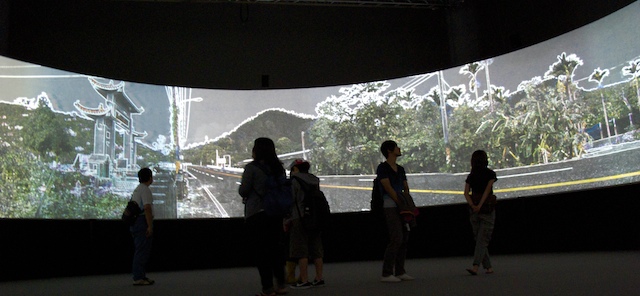
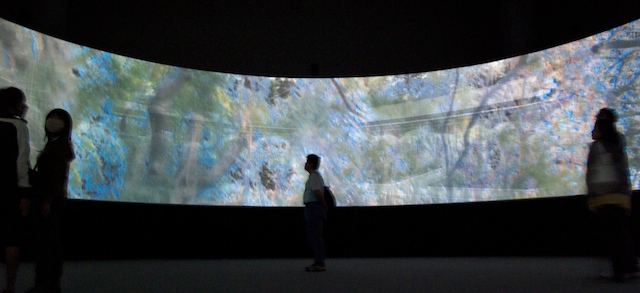
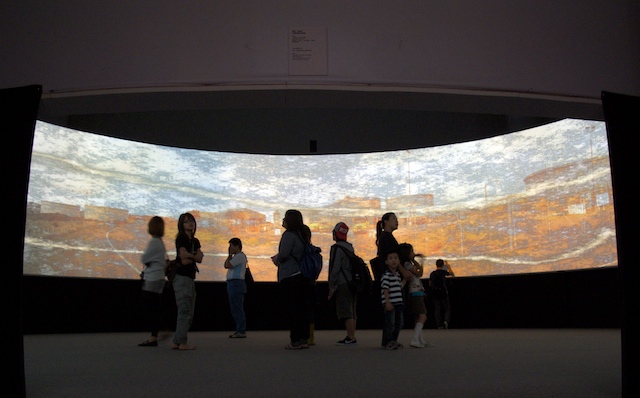
Clesthyra's Undoing Tim Gruchy 2009 2nd Asian Art Biennial National Taiwan Museum of Fine Arts, Taichung Curator . TSAI Chao-yi Created with the grateful assistance of Creative New Zealand Taiwan2009 : Artists Statement hysical and psychological immersions have always been a strong character within my practice. We live our lives surrounded by exteroceptive input of every nature. To navigate this sensorium we narrow down our attention. Consciously but more often unconsciously we position ourselves deftly within the narrowest slipstream of information, rarely stopping to think how our physical and cultural positions in the world imbue the very reality we construct as our day to day existence. This sets up a feedback loop between what we perceive and how we are able to perceive it. My interests lie not in the singular focus but in the mediated experience. One defined by me the artist, but which sets out to set up an experiential dialogue between the work and it’s audience. We are massively screen cultured at this time in history. But most screen culture has been produced within a singularly narrow focus that denies the very nature of how humans perceive our world. Placing an audience into a screen space that fully occupies one’s peripheral vision along with primary vision, creates a far more powerful relationship between the content and the viewer, than what previously existed betwixt the two. My second ongoing interest is synaesthesia. Placing an audience in an immersive interactive environment creates a heightened possibility for slippage across the senses. A phenomenon that is happening to us constantly but which we try to avoid in our rationalist explanations of how our reality works.
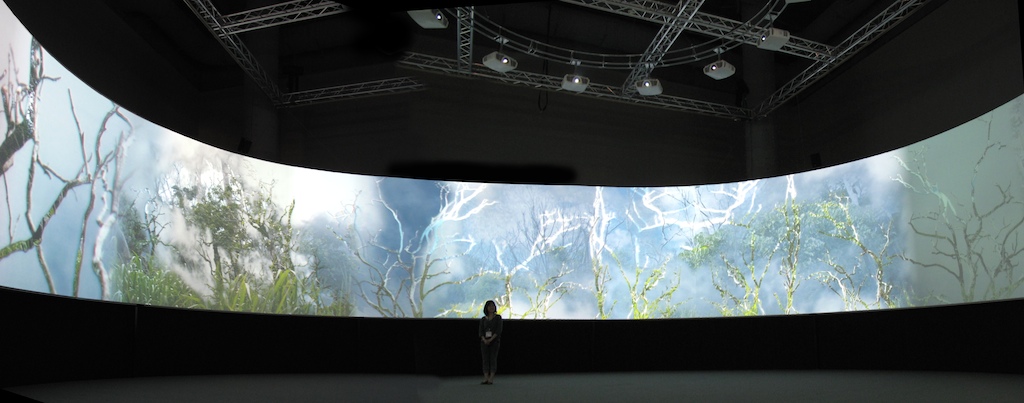
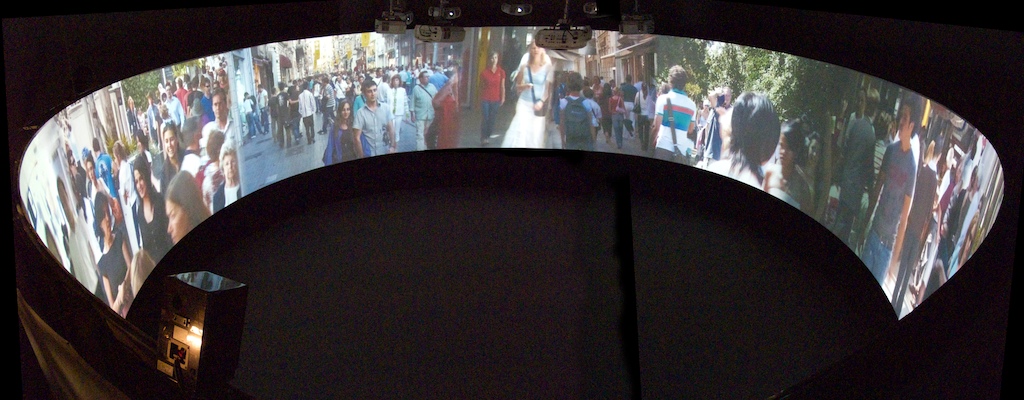
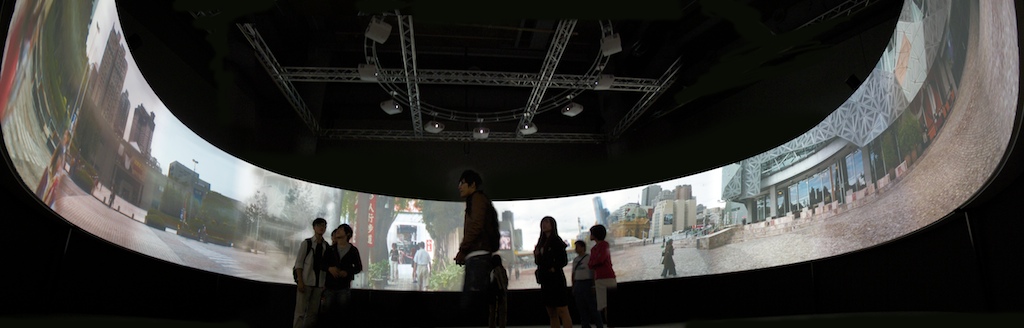
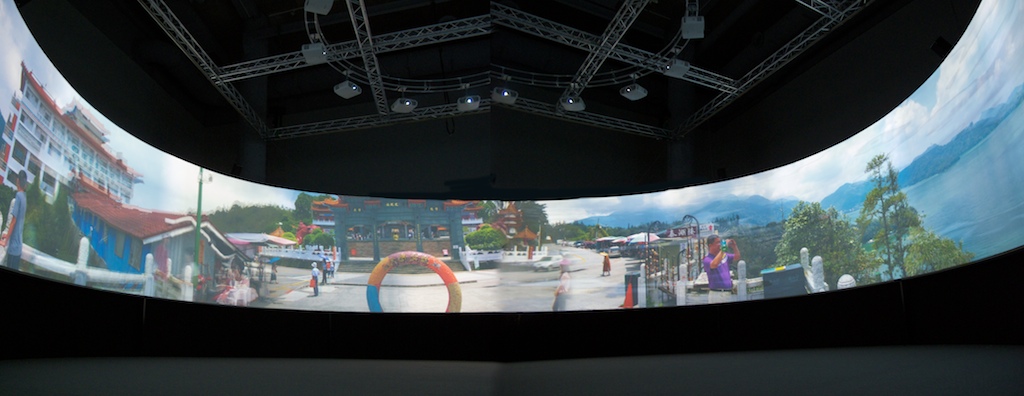
Work Description Clesthyra’s Undoing is a fully immersive, interactive installation of sound and vision. Clesthyra is a fictional mythological character from Neil Stephenson’s Anathem, who can see in all directions at once. This works breaks down and subverts that possibility. It subtly draws the audience’s attention within the 360º screen space, playing with the shifting boundaries between disambiguity and ambiguity. The work moves its audience. At the same time it monitors the audience within the space and how they move proximate to the screen, deriving complex control information, which in turn is fed back to control the screen and sound spatial behaviours and content juxtapositions. The sound design is intended to work in two ways, firstly in bringing and reinforcing a sense of meaning and enhanced emotional resonance to the different phases of the content; and secondly as a strong spatial indicator of the two-way relationship between viewer and screen. The content traverses three domains from which I seek to explore how we bring meaning to what we see. Nature and landscape can portray our idealised view our home earth. The urban environment is now the context and reality of life for most people on the planet. Cultural space is possibly what we experience most differently throughout the world. What we see, the value we give it, and what meaning we derive from it, vary dramatically, being entirely dependent on our point of view.
|
Clesthyra's Undoing - Tim Gruchy .
Clesthyra's Undoing 2009 from Tim Gruchy on Vimeo.
Video by Tim stills by Tim & Rhana Devenport |
|||
|
|
||||